Corneal Care
When the world warps, there's a reason — and a solution.
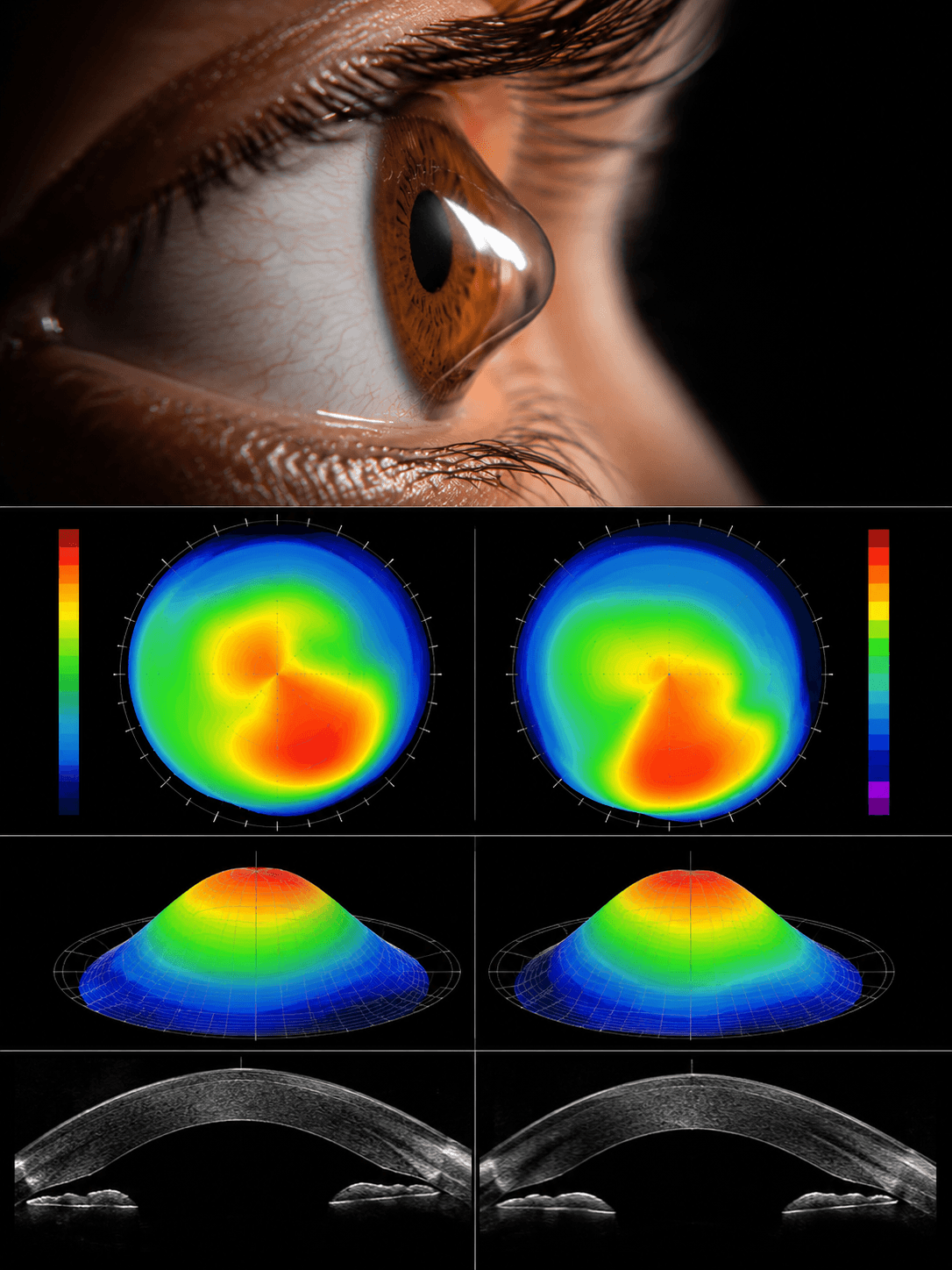
Keratoconus is a condition where the cornea — the clear front surface of the eye — gradually thins and begins to bulge outward into a cone shape. The result is distorted, blurred vision that glasses can no longer fully correct. It typically begins in the teenage years or early twenties and progresses through adulthood.
Caught early, the progression can be halted entirely.
What Causes It
The exact cause isn't fully understood, but genetics play a role — if a parent or sibling has keratoconus, screening is advisable. Chronic eye rubbing, certain systemic conditions, and prolonged contact lens wear can accelerate it.
Early to Moderate Keratoconus
Corneal Cross-Linking (CXL)
Rigid Gas Permeable (RGP) Contact Lenses
Scleral Lenses
Advanced Keratoconus
Corneal Transplant (PKP or DALK) — When the cornea is too scarred or distorted for lenses to help, a transplant restores structure and vision. A significant procedure, but life-changing when needed.
At Roshan
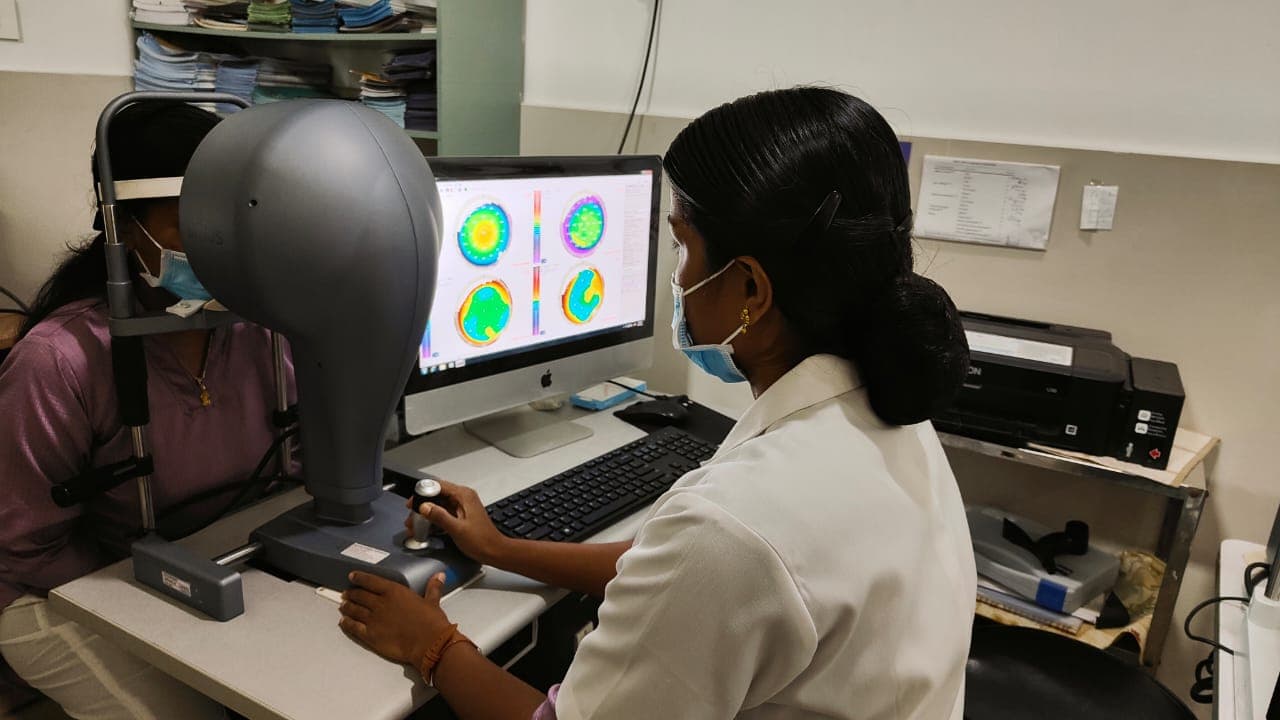
We map the cornea using topography and tomography to track progression precisely. Monitoring frequency is adjusted based on how quickly the condition is changing. If you or your child have been told they have rapidly changing glass power, irregular astigmatism, or eye rubbing habits — come in for a corneal evaluation.
Ready to take the next step? Call us — we will help you find the right appointment.
Book a Corneal Evaluation